
Current e-Journal
-


August 04, 2026
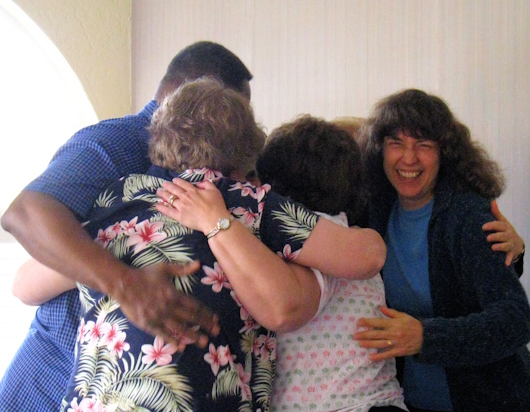
Are your programs creating spaces for connection?
In this week’s Systems Change Newsletter…
- Invitations and Announcements
- Catalytic Thinking Exercise: Creating Spaces for Connection
- Resources to Further Your Practice
Invitations & Announcements:
Evaluation for NON-evaluators (and yes, for evaluators, too)
What if your community members were the ones evaluating your programs? As Creating the Future begins documenting what we’ve learned from our 30+ demonstration projects, YOU will be leading that process! From determining what is important to document and share, to interviewing the folks who led those efforts, this process will be as open and participatory as all our work. We’ll be kicking off that project in September. If you’d like to join the fun, let us know here.
Catalytic Thinking Exercise:
Creating Spaces for Belonging and Connection
This past week, the power of belonging has been announcing itself loud and clear:
In our community of practice, we explored a project one of our members is leading. The project is complex, with many moving parts and just as many directions it could go. After our discussion, that community member shared, “I don't have a lot of people I can just explore with like this. It’s been so helpful.”
In a completely different setting, one of our team members was at the laundromat. As she read her book, she overheard a woman talking with the manager - nothing related to laundry, just chatting. It became clear from watching the manager’s interactions with other patrons that she knows and likes the regulars.
When the patron was done with her laundry, she walked back over to the manager. “Thank you for being here. I’m new in town, and haven’t been able to make friends. It’s hard to find people to spend time with and talk to. Everyone already has their life.”
Our communities are often good at infrastructure for our physical needs. Fire protection, roads, hospitals. What is missing is infrastructure for the social needs of psyche and spirit.
If our house is on fire, we don’t rely on a kindly neighbor or a friend from church to bring their garden hose to put it out. We create fire departments that everyone can rely on. And yet when it comes to caring for a person’s spirit, we assume that is the job of individuals or churches.
What brain science teaches, though, is that the need for connection isn’t “all in your head.” It is physiological. Babies who lack human contact fail to thrive, and can die from that lack of connection. Adults without connection are more likely to face depression. Folks who turn to violence are so often described as “loners.” Our need for each other isn’t a “nice to have.” It is essential for our survival.
What, then, would it take to build organizational infrastructure for connection, belonging, and welcome into the work we changemakers do every day?
Try this
Connection can be part of any aspect of the work you do.
What it takes is being mindful to see your existing programs and facilities as strengths and assets upon which to build that connection. “What would it take to build into this program the ability for people to find connection with each other? And what do we already have to build upon?”
It might be a monthly Haves & Needs gathering, for folks to share resources. That could be for individual community members, sharing things like tools or technology. Or it could be a way for nonprofits to meet up and share what they have.
Or imagine a community of practice around any aspect of your work, whether that is nutrition (a cooking class) or literacy (a book club for any reading level).
Monthly tool swaps, or book swaps, or food swaps. AA meetings.
There are so many ways we can bring people together. It simply takes asking the question. “Given our plans and programs, where are opportunities to connect people?”
Those points of connection can be facilitated, or they can just be gathering places. That will depend on your program, your community members, and your idea for connecting.
In a recent podcast conversation, Joshin Byrnes described the space his group has created, that is simply called Gather. Nothing fancy, it is just a place where folks can come and be. (You can hear more about that in the Resources section below.)
In another community, a local United Way sponsored a monthly gathering of nonprofits, to connect with each other and to share Haves and Needs.
From there, it’s time we lobby local governments to provide infrastructure for people to be together, to begin to bridge the toxic divides we now just think of as “normal.” Those divides are not normal. Those divides are what happens when we lack connection.
The principle of Collective Enoughness is rooted in what we can accomplish together that we can’t accomplish on our own. It is about building on the strength of all of us together. That is the power we gain when we create spaces for social infrastructure. And it is why Collective Enoughness is such an integral part of the Catalytic Thinking framework.
- WATCH: Crushing stigmas can be as simple as connecting and sharing stories. Watch how this HIV / AIDS group did it. Watch here…
- LEARN: How can we build on assets we already have, when we feel like we don’t have anything? This click-and-play class provides step-by-step and some great case studies. Learn here…
- LISTEN: In this podcast, Joshin Byrnes talks about the power (and the personal practice) of being open to our fellow community members. Listen here…
Help Keep Our Programs Freely Available
Creating the Future’s eJournal is free. And there are no financial barriers to our classes – tuition is whatever folks can afford. Because we never want money to stand in the way of people learning.
If you value our content and our approach, please donate here – and please consider becoming a monthly supporter of our work.
eJournal Archives:
If you’re new to our eJournal, or just want to remind yourself of past practice exercises we’ve shared, check out our eJournal archives here.

SUBSCRIBE
to get this e-Journal
Creating the Future is a 501(c)(3) tax exempt organization in the U.S.A