
Creating the Future is stepping into a massive project to evaluate and document everything we have learned from the 30 demonstration projects we’ve done since our inception. And you are invited to help design that project!
As we begin this effort, all sorts of questions arise.
- What shall we evaluate? What shall we document?
- What did we really learn?
- Who are we evaluating for?
- What do those individuals and groups need from the case studies that will result from this effort?
And as always, the bottom-line question:
- Why bother? Why is this important to do? And important for whom?
As we step into this project, clearly the most important people to ask and answer these questions is YOU.
That’s why we are inviting you – our community members – to be the design team for this effort. And of course, that leads us to one more question:
TL:DR Version
Creating the Future is inviting our community to design the next step in our work: evaluating and documenting what we’ve learned from our 30 demonstration projects.
Learn by Doing: Together we will apply Catalytic Thinking to explore what is possible for more effective program evaluation and organizational learning. The result will be a plan that we will put into action immediately, for our own program documentation. And at every step of the planning, you will get to practice putting Catalytic Thinking into action.
When: Fall 2026
Who: If you get excited about designing new frameworks and approaches, this is for you. The opposite of "best practice," and regardless of your experience or profession, we will all be bringing the spirit of inquiry that is at the heart of beginner’s mind.
If you are curious to explore possibilities for more effective approaches to evaluation and organizational learning, read on
– and come join us!
- What does it look like when our community determines what they want our evaluation to reveal?
Project History
Creating the Future’s mission has a fixed timeframe: Make Catalytic Thinking as ubiquitous as possible throughout the social change arena within 10 years. The fixed timeframe is mission-critical, as it forces us to think of our mission as something to be accomplished vs. work that will be needed forever.
If we existed forever, there would be the tendency (and the funding necessity) for us to “own” the work. The open-source nature of our work would be diluted by our need to close ranks and attribute the power of that work to US. That would lead to Catalytic Thinking being “ours,” with an unspoken mandate to control access to that learning. Otherwise, how could we justify our ongoing existence?
But that is the very opposite of our mission! Instead, we want the questions of Catalytic Thinking to be used by everyone seeking a world that works for all of us - the opposite of our "owning" the framework. Because if folks have to come to Creating the Future to learn Catalytic Thinking, then the questions, the framework, and importantly, the results will never be ubiquitous.
Instead, folks need to be able to learn Catalytic Thinking where they are already learning how to create change, and where they are already learning how to run change-making organizations.
For that to happen, we need to provide as much information as we can, to as many people as we can, as quickly and freely as we can. Because right now, the world needs to know that there is a path that can lead us to connect and bridge divides, to reach for what is possible vs. constantly just battling what’s wrong (and battling each other).
The end goal of our years of work is an online Catalytic Thinking library with documents and videos and classes, all available for free for anyone to use and to teach others to use.
And an important part of that library will be case studies, so that folks aren’t just learning the theory behind these questions, but seeing what the questions look like when put into practice - and what happens along the way.
Over the course of our work, we have performed 30 demonstration projects. Each of those projects took place in a different domain (some small orgs, some governments, some universities, some foundations), tackling different topics (funding, governance, planning, organizational culture, engagement). The process of evaluating those projects, and the case studies that result, will show Catalytic Thinking in action throughout a cross-section of the changemaking arena.
The Project and the Details
Writing those case studies will be the LAST step in the process. The FIRST step is the one we are inviting you to be part of: The process design phase.
- Process design: Determine what questions the case studies will answer – and who is important to interview
After the process design phase is complete, we will begin interviewing project participants, learning from and documenting their experience, and turning those interviews into case studies. At the same time, we will be transforming our website into an online resource library, where those case studies will be posted.
This first step, however, is the precursor to all that. Folks from our community will gather to determine what questions are important to be addressed in those interviews and case studies.
That is the project we are inviting you to be part of, lending your wisdom and your desire for a better way, to make this process all it can be.
Why This Approach
At Creating the Future, all our strategy decisions are made collaboratively with our community members. You can see more about that open approach to our work at this link.
We are inviting you to be part of this design process because it walks the talk of radical inclusion that is at the heart of Catalytic Thinking. And because it is only fair to have the beneficiaries of our work be the ones to determine the questions our evaluation will answer. And because there will be many more brilliant minds determining the content of our case studies than if only a handful of us "inside" the organization were thinking about it.
And importantly, because this approach models what it can look like to shift the power dynamics that are inherent in "charity" work - where those "inside" the organization make decisions for and on behalf of those in the community who will receive the benefit of that work.
This is about walking the talk of the world we want to see. It is about democracy in action. That is the ultimate goal of this participatory, collaborative process - demonstrating what is possible when we ask the very first question in Catalytic Thinking:
"Who will be affected by what we are considering?
And what would it take for them to lead the direction we take?"
(opens in new tab)
Who This is for & What You Will Experience
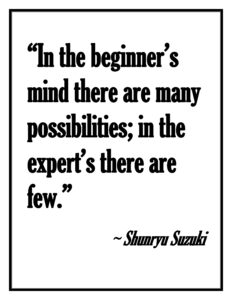 If you get excited about designing new frameworks and approaches, this is for you. Regardless of your field of expertise, we will all be bringing our beginner’s mind – a spirit of inquiry vs. best practice.
- Evaluators (official or “accidental” evaluators) who are tired of trying to fit a square peg in a round hole.
- Strategy people. Because evaluation starts with strategy.
- Funders who encourage groups to perform evaluations.
- Policy and advocacy folks seeking to create systemic transformation.
- Systems disruptors who sense that there has to be a better way to run organizations.
- Anyone who wants hands-on practice with Catalytic Thinking with an issue that applies in every organization
The most important thing is not the job you do every day or the profession you hold. The most important thing is
- Your curiosity
- Your desire for evaluation systems to be more effective for creating change
- Your frustration with systems that feel illogical for evaluating the work you do - and your desire to improve those systems.
- Your desire to hang out with and explore alongside other inquisitive, curious, smart, inventive, energizing people!
What you’ll experience:
If you’ve ever watched or been part of our board meetings or strategy meetings, you know that first and foremost they are energizing, mind-stretching, possibility-focused, and fun. That is exactly what this will be.
These Process Design sessions will be facilitated by Creating the Future’s founder, Hildy Gottlieb, who will walk us through the questions of Catalytic Thinking. (You can see more about Catalytic Thinking here.) Together, Hildy will lead us to explore what evaluation / knowledge generation could look like if that evaluation was itself a tool for inclusion and justice.
As with all our discussions at Creating the Future, this will be a “no-should” zone, with no preconceived notions about how evaluation “should” happen. We will not be relying on any particular evaluation framework, although we may reference some of those frameworks in our discussions. Instead, we will allow the questions of Catalytic Thinking to open our creativity and our sense of possibility.
Importantly, this process will provide you with a way to test-drive Catalytic Thinking for your own work. You will get practice with the questions, and you will experience firsthand the power of asking and answering questions that embrace inclusion, possibility, and strength.
We will meet in October, November, and December of this year. We anticipate there will be 5 sessions, 2 hours each. We will work together with participants to schedule those meetings at times that work for the greatest number of participants. And if you can’t attend all the meetings, no worries. We still want your wisdom to contribute to the work.
The result:
When this step is done, we will have determined the questions we want our case studies to answer. We will have drafted the questions that interviewers will be asking of the folks who participated in our demonstration projects. And importantly, we will have designed a process of documenting / evaluating our 30 demonstration projects in a way that models the values that guide all Creating the Future’s work – equity, inclusion, possibility, and strength.
Join us!
If this sounds intriguing to you, send us a note here. If you’re not sure, send us a note and let’s have a conversation.
We are excited to get started. And we’re excited to have you be part of the last big project at Creating the Future – the legacy that will be our library of case studies.